INDIA GATE

  • Silence in Face of Injustice Threatens Sovereignty, Warns Justice N. V. Ramana

    Former Chief Justice of India Justice N. V. Ramana voiced deep concern over recent global developments, warning that the current international climate reflects a troubling erosion of diplomatic norms and respect for national sovereignty. He remarked that certain actions and statements by powerful world leaders signal a growing disregard for the foundational principle that nations must govern their own affairs without external interference. Justice Ramana was among the first former constitutional functionaries to openly warn against the dangers of silence in the face of such developments.

    He was speaking at the 20th Memorial Lecture organised by the Badrivishal Pannalal Pitti Trust in Hyderabad on March 28, 2026, held to mark the 98th birth anniversary of the late socialist leader Badrivishal Pannalal Pitti. The event featured reflections on Pitti’s legacy alongside discussions on contemporary issues of national and global importance.

    Justice Ramana noted that claims of having “stopped” conflicts involving other countries, along with interventions in regions such as Venezuela and Iran, raise serious questions about the intent and legitimacy of such actions. According to him, these moves lack the essence of diplomacy and instead challenge the very idea of sovereignty, often reflecting arrogance, economic greed, and a desire to control natural resources under the guise of maintaining order and stability.

    He emphasized that the notion of one nation intervening in another’s internal matters, particularly in regions that are home to ancient civilizations, is deeply concerning. He observed that for powerful countries, morality often becomes negotiable, shaped by strategic and economic interests, while for less powerful nations, morality and sovereignty remain central, rooted in hard-won independence achieved through long struggles and sacrifices.

    Highlighting the global impact of such tensions, he pointed out that conflicts between major powers have far-reaching consequences, affecting ordinary citizens across the world. In this context, he stressed that the responsibility to respond does not lie with any one nation or political group but must be shared collectively, calling for a unified global voice against actions that undermine peace and sovereignty.

    Turning to the question of ideology, Justice Ramana said ideology is not confined to politics alone but is a manifestation of an individual’s values, closely tied to human principles and beliefs. He observed that a decline in human values has led to a weakening of commitment to ideologies, even as numerous ideologies continue to promise visions of a perfect society. Emphasising the need for clarity of purpose, he said individuals must focus on their “swadharma,” or inner duty, rather than attempting to adopt every ideological framework.

    Recalling India’s past approach to global issues, Justice Ramana said he was reminded of an article by journalist Krishna Rao of Andhra Jyothy, which brought back an important moment in recent history. He noted that in 2003, under the leadership of former Prime Minister Atal Bihari Vajpayee, the Indian Parliament had taken a principled stand by condemning the United States’ actions in Iraq. He described it as a moment of moral clarity that reflected India’s commitment to universal fundamental values, adding that such clarity now appears to have diminished, with the world growing quieter even in the face of visible suffering.

    Drawing from history, he warned against the dangers of silence by invoking the words of Martin Niemöller in the context of the Second World War: “First they came for the Communists, and I did not speak out—because I was not a Communist. Then they came for the Socialists, and I did not speak out—because I was not a Socialist. Then they came for the trade unionists, and I did not speak out—because I was not a trade unionist. Then they came for the Jews, and I did not speak out—because I was not a Jew. Then they came for me—and there was no one left to speak for me.”

    Expressing disappointment over what he described as a lack of moral leadership globally, Justice Ramana said that many leaders have remained silent in the face of war and suffering. He lamented the absence of a widely respected international figure who can command moral authority and mobilize collective resistance against injustice.

    Justice Ramana urged individuals and nations alike not to remain silent in the face of suffering, cautioning that failing to support others in times of crisis ultimately weakens collective security and undermines the very values that sustain a just and equitable world order.

    Rising Political Opportunism Undermines Democratic Values

    At the political level, he noted that while different parties have held power over time, none have succeeded in building an ideal society. This, he said, is because political parties have largely failed to translate their ideologies into meaningful action, echoing the idea of a “poverty of philosophy.” He described ideology as the crucial link between political parties and the people, but pointed out that in recent years, loyalty has increasingly shifted from principles to power.

    Justice Ramana highlighted a growing trend where elected representatives switch allegiances based on electoral prospects, sometimes even immediately before or after elections. Such actions, he said, undermine democratic values and reduce ideology to mere opportunism. He cautioned that when ideologies are not backed by action, the effectiveness of democratic institutions diminishes and public trust is eroded.

    Referring to rising instances of political defections, he said that constitutional mechanisms meant to address such practices are being undermined, turning what was once seen as political betrayal into an accepted strategy. He warned that treating the voter’s mandate as a transferable asset poses a serious threat to democracy, adding that morality cannot be enforced by law alone and must be internalised by those in positions of power.

    He also expressed concern over increasing divisions in society despite the weakening of ideological commitment, particularly the use of misunderstood religious ideologies as tools for polarisation. Emphasising that all religions fundamentally promote values of peace, compassion and fraternity, he said the true strength of a society lies in its ability to embrace diversity and coexist harmoniously.

  • India at a Turning Point: The Decline of Naxalism and the Road Ahead

    A discussion is scheduled to be held in Parliament on March 30 regarding the measures being taken by the government to eradicate Maoist extremism. In this context, the reported imminent surrender of top Maoist leader Muppala Lakshmana Rao (Ganapathi) is being viewed as a potentially decisive moment. Union Home Minister Amit Shah has reiterated the government’s commitment to eliminate Maoist extremism by March 31, 2026. Recent developments—including the killing of several senior leaders in 2025 and the surrender of nearly 4,000 cadres—indicate that sustained security operations and policy measures have significantly weakened the movement. If Ganapathi surrenders, it would represent not only a strategic setback but also a major symbolic blow to the Naxalite movement.

    The Naxalite movement traces its origins to the 1967 uprising in Naxalbari, where peasants revolted against feudal landlords. Inspired by Maoist ideology, leaders such as Charu Majumdar and Kanu Sanyal mobilized marginalized communities around demands for land redistribution and social justice. Over time, the movement spread across states like Chhattisgarh, Jharkhand, Odisha, and Telangana, forming what came to be known as the “Red Corridor.” The formation of the Communist Party of India (Maoist) in 2004 sought to consolidate the insurgency, though internal divisions had already begun to weaken its cohesion.

    Over the decades, the movement fragmented due to ideological differences, leadership rivalries, and disagreements over strategy. Some factions advocated immediate armed revolution, while others emphasized mass-based political mobilization. Disputes over tactics—including the targeting of civilians—further eroded unity. Even after consolidation attempts, splinter groups continued to emerge, weakening the movement’s overall strength and coordination.

    This fragmentation was accompanied by a steady erosion of public support. While the movement initially drew legitimacy from its opposition to exploitation and inequality, its increasing reliance on violence, extortion, and coercive control alienated the very communities it claimed to represent. As a result, public perception has shifted significantly: encounter deaths of Maoist leaders no longer evoke widespread sympathy, and in many areas, there is growing acceptance—if not quiet support—for state action aimed at restoring stability and enabling development.

    Despite this decline, the persistence of the movement was rooted in structural issues such as land inequality, displacement of tribal populations, governance deficits, and lack of economic opportunities. These conditions enabled Maoists to sustain support in certain pockets and continue guerrilla operations for decades.

    The government’s response evolved significantly over time. Under P. Chidambaram, a coordinated national strategy was introduced that combined security operations with development initiatives. Measures such as synchronized inter-state operations, strengthening of central forces, expansion of intelligence networks, and programs like the Integrated Action Plan aimed to improve infrastructure and governance in affected regions.

    Building on this foundation, the government under Narendra Modi, with Amit Shah leading internal security efforts, has adopted a comprehensive, time-bound, and highly coordinated strategy to eliminate Naxalism. This approach has emphasized close cooperation with state governments, expansion of security infrastructure, improved connectivity, and the implementation of the SAMADHAN doctrine. The increasing use of advanced technologies—including surveillance drones, cyber intelligence, and systems influenced by international practices—has further constrained the operational space available to Maoist groups. In an era of digital monitoring, maintaining secrecy and sustaining long-term insurgency has become significantly more difficult.

    A clear indication of the movement’s internal crisis is the surrender of senior Maoist leader Mallojula Venugopal Rao, who described the CPI (Maoist) as a “failed experiment.” He acknowledged that the movement failed to adapt to changing conditions, underestimated the strength of the Indian state, and gradually lost its social base due to its own mistakes. His appeal to cadres to lay down arms reflects a broader shift within the movement itself.

    Another dimension shaping the trajectory of Naxalism has been its romanticisation by sections of intellectual and cultural circles. In its early decades, it was often portrayed as a heroic struggle against injustice. While such narratives drew attention to genuine social issues, they also created an idealized image of armed revolution that did not align with ground realities. This sometimes misled sections of youth, who were drawn by ideological appeal but later confronted the harsh realities of violence, isolation, and limited outcomes. Over time, the gap between romantic portrayals and lived experiences contributed to disillusionment.

    As the movement declines, previously inaccessible regions—particularly in mineral-rich states like Chhattisgarh, Jharkhand, and Odisha—are opening up for economic and industrial activity. Improved security conditions have reduced operational risks for businesses, enabling infrastructure projects and attracting investment in sectors such as mining, manufacturing, logistics, and telecommunications. This has the potential to generate employment, boost local economies, and integrate remote regions into the national development framework.

    However, this transition also brings important responsibilities. Sustainable progress will depend on ensuring that development does not replicate past patterns of displacement and exploitation. Fair compensation, environmental protection, and meaningful engagement with tribal communities are essential to maintaining long-term stability and preventing the re-emergence of unrest.

    In conclusion, the Naxalite movement has evolved from a peasant uprising in Naxalbari into a major insurgency and now into a weakened, fragmented, and increasingly isolated force. The combined impact of internal divisions, declining public support, sustained security operations, and technological advancements suggests that India may be approaching a decisive turning point. However, the lessons of the past remain crucial. The government must ensure that the conditions which once enabled exploitation and alienation do not re-emerge in new forms. Preventing exploitative practices, safeguarding the rights of vulnerable communities, and ensuring equitable and inclusive development are essential—not only to consolidate current gains but also to ensure that discontent does not give rise to similar movements in different forms in the future.

  • “Strategic Autonomy or Strategic Adjustment? India’s New Reality”

    Prime Minister Narendra Modi stated in both Houses of Parliament that, due to the war raging in West Asia, the country is facing a situation similar to the crisis that arose during the COVID period, and that everyone should be prepared to face it together. While saying that there is no shortage of gas and oil at present, it is noteworthy that he also described the situation as worrying. He declared that not just India but the entire world is facing an energy crisis. In reality, it is not unknown to him that people have already begun facing difficulties regarding cooking gas. With the sudden rise in demand for induction stoves in the country, their prices have also increased. Those who cannot afford these stoves have already begun either going hungry or depending on others. “You have CNG at home, right… I’ll make four rotis and go…” our domestic worker asked. The sale of gas cylinders in the black market is also taking place. Shops that used to fill gas into 5 kg cylinders have shut down. There are many instances of consumers quarrelling with dealers over cylinders due to them. Prices of tea and food items at roadside stalls have also increased. “No stock” boards are visible at many petrol pumps. People, believing rumors, are lining up at petrol pumps. Since it is unclear how this situation will be in the future, Prime Minister Narendra Modi came before the people. Recalling the experience of some selling oxygen in the black market during COVID, he warned that black marketing will not be tolerated. Modi is also aware that people will not ignore these issues during the Assembly elections in five states. India imports nearly 60 percent of its LPG. Of that, 90 percent must pass through the Strait of Hormuz. According to the latest reports, with great difficulty, we have managed to bring in four ships so far. Modi told Parliament that a large number of Indians have been safely brought back from the Gulf. The benefits that families here used to receive from the remittances sent by them have now stopped. “We know you will face problems at present. But this war is happening so that there will be no problems in the world in the long term,” Israel’s ambassador Reuven Azar said recently in Delhi. Who gave Israel, or its godfather America, the authority to wage war on behalf of all countries in the world?

    In fact, as soon as Parliament sessions began, the opposition strongly demanded that Prime Minister Narendra Modi make a statement on the West Asia situation. With insistence on a discussion in Parliament, the House was adjourned several times. Rahul Gandhi made serious allegations that Modi avoided discussion. Finally, Modi made a statement in Parliament explaining the situation, but a discussion on West Asia has still not been conducted. Modi said in his speech that he is speaking with Israel, America, and Iran, and has made it clear that the issue should be resolved diplomatically. However, even as he emphasized diplomacy, global developments indicate parallel backchannel efforts: the Donald Trump administration has reportedly offered a 15-point ceasefire plan to Iran, conveyed through intermediaries from Pakistan, which has also offered to host renewed negotiations between Washington and Tehran. Trump stated for a second consecutive day that the United States is in talks with Iran to end the war, while JD Vance may lead potential negotiations that could take place in Islamabad, with Pakistan acting as a mediator.

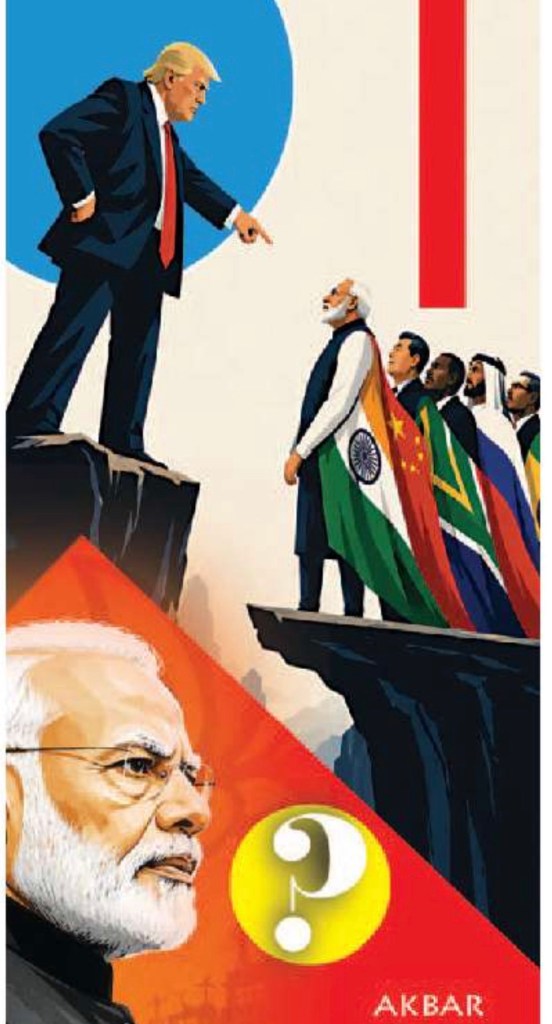
    Unlike in the past when Trump claimed he had stopped an India–Pakistan war, Modi is not in a position to make such a claim now. India has developed such close ties with America and Israel during Modi’s tenure that it is no longer in a position to criticize those two countries. This could turn into a double-edged sword. The fact that Modi did not criticize the stance of America and Israel at all in his lengthy speech in both Houses of Parliament is evidence of this. Even when an Iranian ship returning after participating in naval exercises conducted by India in the waters off Visakhapatnam was blown up by America in the Indian Ocean, India did not condemn it. At the same time, India is also in a position where it cannot sever its historical ties with Iran. Modi has already spoken twice with Iran’s President Masoud Pezeshkian and expressed sympathy over the attacks. He requested that there be no obstacles to energy supplies.

    In fact, when America attacked Iraq in 2003 on the pretext of chemical weapons, the government of Atal Bihari Vajpayee not only strongly condemned it but also introduced a resolution in Parliament. The ruling and opposition parties together unanimously passed that resolution condemning America’s stance. Speaker Manohar Joshi himself introduced the resolution, severely criticizing the attacks by American coalition forces on Iraq. Congress leader Jaipal Reddy described it as a very unusual resolution and explained how dangerously America was acting. He urged India to remain alert to the consequences of America’s toxic conspiracies. BJP leader Vijay Kumar Malhotra, Telugu Desam Parliamentary Party leader Yerran Naidu, Samajwadi Party leader Mulayam Singh Yadav, CPI(M) leader Somnath Chatterjee, along with leaders of all parties, condemned American aggression. Then External Affairs Minister Yashwant Sinha declared that no one could suppress the voice of India, the world’s largest democracy, and that the country was ready to face any challenge.

    What changes have occurred between the Vajpayee government and the Modi government? Why are the BJP and its allies now unable to comment clearly on developments in West Asia? Why have they ignored attacks on Venezuela and Iran?

    What is surprising is that Pakistan, which has been closer to America than India, is now playing a key role in trying to broker peace between Iran and America. Reports indicate that Pakistan’s Army Chief Field Marshal Munir spoke with US leadership, and Prime Minister Shehbaz Sharif also spoke with Iran’s President Masoud Pezeshkian. It is said that Pakistan, along with Turkey and Egypt, is making serious efforts to stop the war. In fact, Pakistan strongly condemned the joint attacks by America and Israel on the Islamic Republic of Iran in violation of international law. Instead of punishing such Pakistan, why is America allowing it to attempt mediation?

    Amid these developments, the Indian government on Wednesday convened an all-party meeting around 5 pm over the ongoing West Asia conflict that began after US–Israeli strikes on Iran on February 28. Defence Minister Rajnath Singh chaired the meeting, with External Affairs Minister S. Jaishankar and Petroleum Minister Hardeep Singh Puri in attendance. The meeting was held inside the Parliament building without the presence of Prime Minister Narendra Modi. Rajya Sabha’s Leader of the Opposition Mallikarjun Kharge objected to the format and demanded a full debate in the House instead of just a briefing. Lok Sabha Leader of Opposition Rahul Gandhi said he would be unable to attend due to a prior engagement in Kerala. This meeting followed Modi’s address in Parliament, where he urged citizens to be prepared for every challenge and warned that the effects of the war could last for a long time. He also stated that the government has constituted seven empowered groups to formulate strategies on fuel, supply chains, fertilizers, and other sectors to mitigate the impact of the Iran–Israel–US conflict.

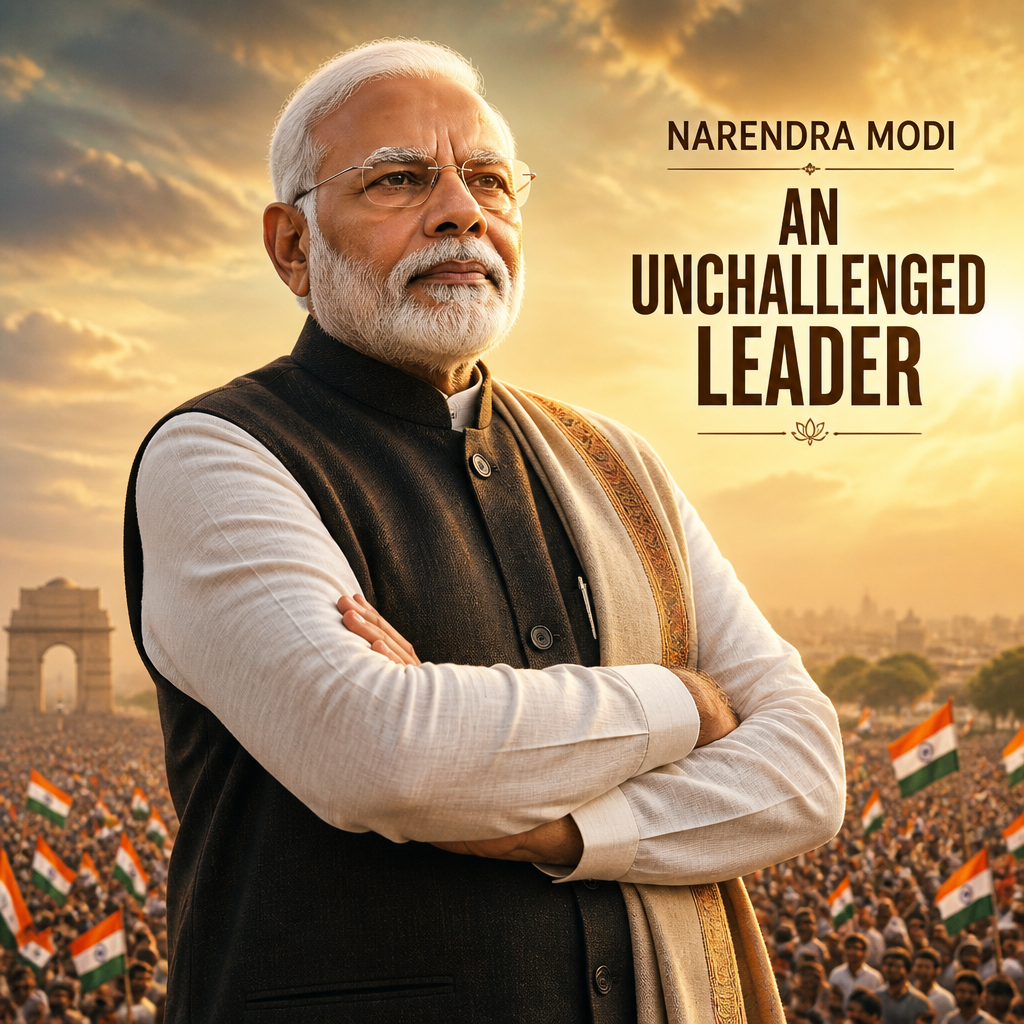
    Prime Minister Modi has so far visited 68 countries. He has toured the United States, the United Arab Emirates, Japan, Russia, and many other countries multiple times. It cannot be said that this has not enhanced India’s reputation or brought economic benefits. Large-scale defense and industrial investments and technology transfers have increased. Modi has invited foreign direct investment from many countries, including China, and has entered into strategic agreements with several nations. Modi is the only Indian Prime Minister to have visited the United States nine times and Israel twice. Having recently completed 8,931 days in public office, Modi was praised unanimously by NDA leaders. Home Minister Amit Shah described him as a Prime Minister who upheld India’s self-respect on the global stage. Even so, it remains to be discussed whether India has lost its strategic autonomy under Modi, who has acted differently from the approaches followed during the tenures of Indira Gandhi, Vajpayee, and P.V. Narasimha Rao, or whether it is merely being forced to take a temporary step back.

    In any case, at this juncture, the Modi government suddenly bringing forward the women’s reservation bill and the delimitation of constituencies is another surprising development. As initially planned, the latest census should have been completed, the number of constituencies increased, and then women’s reservation implemented. But why was there a need to introduce delimitation and women’s reservation based on the 2011 census? If these bills are passed, the focus of political parties and the public will certainly shift entirely to constituencies and women’s seats. Whether this will bring the expected political advantage to the Modi government in the Assembly elections in five states can only be known once the results are declared.

  • Revamping the Sahitya Akademi: Restoring Credibility and Cultural Vision

    Indian literature today stands at a fascinating and critical crossroads. It is not a moment of decline, as some may fear, but rather a moment of immense possibility. Across the vast linguistic and cultural landscape of India, there exists an extraordinary wealth of writers—working in dozens of languages, representing countless traditions, and expressing a wide spectrum of human experience. Together, they form a living bridge between the classical past and the evolving modern present.

    This continuity becomes clearer when we look at the grand lineage of Indian literary thought. From ancient sages and poets to modern storytellers, each generation has enriched and reinterpreted the cultural inheritance of the land. The foundations were laid by timeless figures such as Kalidasa, Bhavabhuti, Valmiki, and Vyasa. Their works were not merely literary creations but civilizational pillars. Epics like the Ramayana and the Mahabharata shaped ethical imagination, social values, and philosophical inquiry for centuries. Classical Sanskrit literature brought refinement in aesthetics, language, and dramatic expression, creating standards that continue to inspire writers even today.

    This tradition flowed into regional languages with renewed vitality. Poets such as Tulsidas in Hindi and Kamban in Tamil reimagined the epics in ways that resonated with local cultures while preserving universal values. In Tamil literature, Subramania Bharati emerged as a transformative modern voice who infused poetry with nationalist fervor, social reform, and a passionate call for equality, especially women’s emancipation. His works combined lyrical beauty with revolutionary thought, making literature a vehicle for both cultural pride and progressive change.

    In Telugu literature, alongside the classical brilliance of the Kavitrayam and Pothana, modern writers like Gurajada Apparao played a pioneering role in shaping contemporary literary sensibilities. His celebrated work Kanyasulkam not only introduced realism and social critique into Telugu drama but also challenged regressive social practices such as dowry and caste discrimination. Gurajada’s emphasis on using spoken language (vyavaharika bhasha) marked a significant shift, making literature more accessible and socially relevant.

    These writers did not merely translate or imitate earlier traditions—they transformed, localized, and democratized literature, bringing it closer to the lived realities of the people.

    Alongside them, voices like Kabir emerged as powerful agents of social and spiritual questioning. Rejecting rigid orthodoxy, Kabir’s poetry cut across religious and social boundaries, emphasizing inner truth and human unity. This phase of Indian literature demonstrated that it could be both deeply rooted and radically questioning at the same time.

    As India moved into the modern era, literature began to engage more directly with social realities. Writers like Premchand brought the lives of ordinary people into the center of literary discourse. His works exposed poverty, caste oppression, and moral dilemmas with unprecedented realism and empathy, marking a shift towards socially conscious writing. Literary movements further expanded the expressive possibilities of Indian literature. The Chhayavad movement in Hindi poetry, for instance, introduced a new lyrical sensibility, blending romanticism with introspection and individual expression. Similarly, progressive and modernist movements across languages challenged established norms and opened new avenues for experimentation.

    What is remarkable is that all these writers and movements, despite their differences in time, language, and ideology, contributed to a shared literary civilization. They enriched Indian literature not by conforming to a single viewpoint, but by expanding its horizons. Each added a new dimension—whether it was spiritual insight, aesthetic excellence, social critique, or philosophical depth.

    At the heart of this literary tradition lies a deep engagement with human values—love, devotion, justice, dignity, equality, and the search for meaning. Writers have confronted complex issues such as caste oppression, gender inequality, cultural erosion, and social exploitation. They have not only documented society but have challenged it, questioned it, and, at times, reimagined it.

    In earlier decades, it was perhaps easier—or at least more common—to categorize writers along ideological lines, broadly labelling them as “left” or “right.” Such classifications may have had some contextual relevance during specific political or intellectual movements. However, in today’s literary landscape, these divisions appear increasingly inadequate. They oversimplify the richness of literary expression and reduce complex creative minds to narrow labels.

    A writer cannot be fully understood through the prism of ideology alone. A novelist who critiques tradition in one work may celebrate it in another. A poet who questions authority may simultaneously uphold cultural continuity. Literature is not bound by rigid binaries; it thrives in ambiguity, contradiction, and evolution. To judge writers primarily by their perceived ideological leanings is to diminish the very essence of their craft.

    This concern becomes particularly significant when we turn to contemporary debates around literary institutions and awards. The Sahitya Akademi, India’s premier literary body, continues to play a crucial role in recognizing and promoting literary excellence. However, recent discussions have raised important questions about its processes and decisions.

    The announcement of the annual awards once again triggered debate. The selection of writer Mamta Kalia brought both appreciation and criticism. Some observers argued that the specific work recognized was comparatively weaker, raising a broader concern that in recent years, senior writers have sometimes been honoured for works that may not represent their strongest contributions. This has led to a fundamental question: should awards be given for a particular work, or should they recognize a writer’s overall literary contribution?

    At the same time, concerns have been raised about the role of ideology in shaping decisions. It is often suggested that ideological leanings influence institutional functioning, and that selection committees may not always be entirely neutral.

    Procedural questions have also emerged. Changes in the award process, delays in announcements, administrative transitions within the Akademi, and the involvement of the Ministry have all contributed to a sense of uncertainty. There have been questions about whether proper procedures were consistently followed and whether transparency has been adequately maintained.

    These concerns cannot be dismissed outright. Institutional credibility depends on clarity, fairness, and trust. At the same time, it is important to recognize a deeper issue within these debates. Instead of focusing primarily on literary merit, discussions often shift quickly toward ideological suspicion. Writers and works are evaluated not only on their artistic value but also through the lens of perceived affiliations.

    This tendency reflects the very limitation that contemporary literary discourse must overcome. A writer like Mamta Kalia, with a long and respected career, cannot be reduced to a single work or judged solely through ideological assumptions. Similarly, any award decision should be examined first and foremost on the basis of literary quality.

    The more meaningful questions are: Does the work demonstrate depth, originality, and insight? Does it engage meaningfully with human experience? Does it contribute to the evolving tradition of literature? These are the criteria that must guide literary evaluation.

    In this context, the idea of bringing Indian writers into a shared national stream gains significance. This does not imply erasing differences or enforcing uniformity. On the contrary, it calls for a collective recognition that all these diverse voices—regardless of language, region, or viewpoint—are part of a common cultural heritage.

    Such a vision requires strong and thoughtful institutional support. The Sahitya Akademi must evolve beyond being merely an awarding body into a vibrant, inclusive forum that brings together writers who think beyond rigid ideological boundaries. It should encourage dialogue across languages and regions, expand translation initiatives, mentor emerging writers, and ensure that recognition is based purely on merit.

    At the same time, neutrality should not be mistaken for the absence of values. Literary institutions must nurture a broad and inclusive cultural consciousness—one that respects India’s civilizational depth, cultural diversity, and shared heritage. This perspective does not impose uniformity; rather, it celebrates plurality within a unifying framework.

    If guided by such a vision, Indian literature has the potential to achieve even greater global relevance. Its philosophical depth, ethical concerns, and aesthetic richness offer insights that resonate far beyond national boundaries. The idea of India as a cultural and intellectual guide to the world can find powerful expression through its literary traditions.

    Equally important is the need to elevate the public status of literature within the country. Literary achievements should be recognized as national achievements. Writers should be seen not as isolated individuals but as contributors to a larger cultural and intellectual tradition.

    However, in pursuing unity, one must not lose sight of diversity. The strength of Indian literature lies precisely in its plurality—in its ability to accommodate multiple perspectives within a shared cultural space.

    The way forward is not to erase differences but to transcend divisive labels. It is to move beyond ideological reductionism and return to the core values of literary engagement—depth, authenticity, creativity, and human insight.

    By doing so, we affirm Indian literature as a living, evolving tradition—one that continues to question, inspire, and connect. In that aspiration lies the true realization of India as a literary and cultural force with global significance.

  • “Beyond the Uproar: Elections Will Decide All”

    Elections have been announced in a Union Territory. Now everyone’s attention is on the developments taking place in the election-bound states. For the past two days, parliamentary proceedings have been running smoothly. The government and the Speaker agreeing to lift the suspension of eight MPs who were suspended in previous sessions is an indication that some understanding has been reached between both sides. However, no matter how much uproar is created in Parliament, or how stubbornly the government behaves, ultimately both the ruling party and the opposition must prove their strength before the people, right? Unless public anger against the government erupts and is reflected in election results, there is no benefit in stalling Parliament. After Parliament discussed and rejected the no-confidence motion brought against him over two days, Speaker Om Birla, upon resuming his seat, remarked, “These two days of the House’s time have been wasted.”

    It is surprising that the opposition was not even ready for voting on the no-confidence motion they themselves introduced. Wouldn’t it have been better if a message had gone out that 233 opposition members in the House opposed Om Birla? Perhaps the opposition feared that it would give an impression to the public that they are not united. It is noteworthy that MPs from the Samajwadi Party and Trinamool Congress did not sign the no-confidence motion. Even so, adhering to opposition dharma, they spoke in favor of it. While a discussion was supposed to take place on the no-confidence motion against Om Birla, insisting on discussing West Asia and stalling the House suggests that Congress was not serious about its own motion and had its reasons. Yet, their opposition is directed more at Modi than at Birla, isn’t it?

    In fact, Parliament provides an excellent platform for the opposition to clearly present their views and attract public attention. In the past, leaders like Hiren Mukherjee, Indrajit Gupta, Piloo Mody, Atal Bihari Vajpayee, George Fernandes, Sushma Swaraj, Arun Jaitley, and Venkaiah Naidu made remarkable speeches while in opposition, which established them as national leaders. Compared to them, it must be said that Rahul Gandhi has not yet emerged as a powerful orator in Parliament. It cannot be said that Congress lacks good speakers, but since Rahul Gandhi is the Leader of the Opposition, politics revolves around him. He seems to have developed a style of creating commotion by bringing up topics like Nirav or Epstein just moments after beginning to speak. Perhaps he is missing the opportunity to present the same issues in a powerful, flowing speech that could captivate not only members but the entire nation. On the other hand, Priyanka Gandhi Vadra, though she has delivered only a few speeches so far, has made them widely discussed. After she challenged, “Make all your criticisms against Nehru at once… let’s discuss them,” the ruling party’s criticism of Nehru in Parliament subsided. During the debate on the no-confidence motion against Om Birla, Trinamool MP and 33-year-old actress Sayoni Ghosh spoke so effectively and exposed the BJP’s stance in a way that no one had expected.

    The fortune of the Bharatiya Janata Party, especially Prime Minister Narendra Modi, lies in the fact that the opposition has not only failed to stand strong in elections but is also not effectively using Parliament as a platform. Even though there are many issues to criticize Modi on, Congress’s attacks are not reaching the public strongly. Interestingly, even in states where the BJP is not very strong, there are intellectuals who argue that Modi is extremely powerful. For example, in Karnataka, Tamil Nadu, Kerala, Andhra Pradesh, and Telangana, the BJP is not very strong. Yet, if two people from these regions talk for ten minutes, Modi’s name repeatedly comes up in their conversation. There are more people overestimating Modi’s strength than perhaps necessary. It is said that a German leader once remarked, “Even criticizing me is a crime, and ignoring me is also a crime!” This situation is perhaps pushing Modi to consider simultaneous elections.

    Coming to the southern states, after losing in Karnataka in 2023, the BJP has not yet recovered and is struggling with internal conflicts. B. S. Yediyurappa has completed 50 years in politics but has made it clear that he is not ready to retire. Just as there is uncertainty at the national level about who will succeed Modi, in Karnataka too it is unclear who will lead after Yediyurappa. Even BJP leaders themselves cannot say whether the party will strengthen in Karnataka by the next elections. In Telangana, everyone knows the BJP is struggling to rise above the third position. In Kerala, which is heading into assembly elections, it is not easy to predict whether the BJP will increase its vote share or win even ten seats. In Tamil Nadu, the confusion within the BJP is evident from its own actions. Despite attempts to split the AIADMK or promote Annamalai, the BJP has not gained strength. Ultimately, it has had to ally again with the AIADMK and depend on the seats given by it, even resorting to moves like offering the Deputy Chief Minister post to actor Vijay, who is new to politics. No matter how much the BJP expands in northern India, the people of the southern states have not yet embraced it. It is leaders who are welcoming it with shawls, not the people!

    At the national level, the BJP’s strategy broadly includes consolidating Hindu votes, pursuing politics in the name of nationalism, and projecting Modi as a strong leader. However, in states like West Bengal, Assam, Tamil Nadu, Kerala, and Puducherry, where elections are being held, Hindutva politics is not as strong as in the north and west. A form of sub-nationalism exists in these states, similar to Andhra Pradesh and Telangana. Therefore, making BJP-style politics succeed in these states is a real test for the party and for Modi. The BJP knows that fighting regional parties is not as easy as fighting Congress. Moreover, in states where the BJP has won, even relatively unknown leaders have been accepted as Chief Ministers. But such a situation does not exist in the current election-bound states. When L. K. Advani was BJP president, strong leadership was built in every state, including leaders like Modi. Today, Modi does not have leaders at either the national or regional level who can stand beside him and draw public applause. This is both his strength and his weakness.

    In the southern states, apart from marginally increasing vote share and maintaining alliances, there is little the BJP can achieve. Winning West Bengal is a major challenge for Modi. Modi and Amit Shah are making every possible effort to defeat Mamata Banerjee this time. They are well aware that Hindutva politics alone cannot secure victory in Bengal. Efforts such as revising voter lists and allegedly removing over six million voters, replacing the governor with IPS officer R. N. Ravi, making administrative changes, conducting ED raids, and consolidating Hindu votes are all being undertaken. Addressing a rally at Kolkata’s Parade Ground a day before the election announcement, Modi expressed concern that Hindus might become a minority in Bengal. The BJP’s strength in Bengal is gradually increasing. However, Modi and Amit Shah failed to defeat Mamata Banerjee in 2016 and 2021. Now they are facing her for the third time. Although they could not defeat Arvind Kejriwal in Delhi in 2015 and 2020, they managed to secure victory in 2025 on the third attempt. Will they be able to repeat that success in Bengal this time? Can Bengal be compared with Delhi? In any case, past elections are one thing, and the upcoming elections are another. These elections can be seen as a trial by fire for the strategies Modi has pursued over the past twelve years. Will Modi be able to withstand the challenges emerging at both national and international levels, counter questions about his policies, and outmaneuver opposition strategies to stand tall like a formidable leader?

  • The Sharpened Voice in the People’s Throat – Vairamuthu

    At a poetry festival held in 1975 at Pachaiyappa’s College in Chennai, the then Chief Minister M. Karunanidhi came and read poetry. At the same festival, a 23-year-old young man read his poems and said that from the age of 12, Karunanidhi had been his inspiration in poetry. Listening to those poems and the young man’s words, Karunanidhi was deeply impressed and suggested, “Why don’t you write for Kunkumam magazine?” From then on, a friendship developed between Karunanidhi and that young man. Whether Karunanidhi won or lost in politics, the friendship continued unchanged. Karunanidhi would even attend small programs for his sake. Out of the 37 books written by that young man, Karunanidhi himself released 18 of them. That young man is none other than Vairamuthu, who was selected for the Jnanpith Award, which is considered as the highest literary award in India. on Saturday. After C. Narayana Reddy, Vairamuthu is another writer who has received the Jnanpith Award as both a film lyricist and a literary figure.

    The Jnanpith Award is India’s highest literary honour, often called the “Nobel Prize of Indian literature,” awarded annually for outstanding contributions to literature by Indian citizens. It includes a ₹11 lakh cash prize, a citation, and a bronze Saraswati idol. Vairamuthu was selected for the 2025 (59th) award, becoming the third Tamil writer honoured

    Seventy-three-year-old Vairamuthu published his first poetry collection when he was just 19 years old. While he was still a student, that poetry collection became a textbook. Born in Mettur in Theni district, Vairamuthu, who belonged to the Kshatriya community, continued his education while doing agriculture. His poems express rural life, human relationships, the environment, and the dangers arising from globalization. Social problems such as poverty, a mother’s love, child marriages, and lack of freedom appear throughout his poetry. He says, “My poetry is the voice of those who remain silent.” Ancient Sangam literature has greatly influenced him. Blending ancient literary words with modern music is his specialty.

    After reading Vairamuthu’s poems, Bharathiraja gave him the opportunity to write songs for films in 1980, when he was 27 years old. His first song was sung by S. P. Balasubrahmanyam. From then on, he never looked back. Over the past 46 years, he has written about 7,500 songs. Directors and composers such as K. Balachander, A. R. Rahman, Ilaiyaraaja, and Mani Ratnam made his songs resonate on people’s lips. Singers like S. P. Balasubrahmanyam, Shankar Mahadevan, K. S. Chithra, and P. Unnikrishnan gave melodic beauty to his poetry. The song “Chinna Chinna Aasai” that he wrote for the Tamil film Roja later became a hit in many languages including Telugu. Not only songs, he also wrote screenplays and dialogues. At the same time, he never stopped writing poetry.

    Vairamuthu belonged to one of the 14 villages submerged because of the Vaigai dam; his novel Kallikkattu Ithikasam, which depicts the tears, blood, and suffering of the displaced people affected by modernization, received the Sahitya Akademi Award. Another novel, Karuvachi Kaviyam, about the life of a rural woman crushed by patriarchy, also became famous. Along with Padma Shri and Padma Bhushan, he has received many honors. As a lyricist, he has won the National Award seven times. Just as Viswanatha Satyanarayana is recognized as “Kavisamrat” in Telugu, Vairamuthu received the title “Kavisamrat” in Tamil. This title was presented when Atal Bihari Vajpayee was the Prime Minister.

    No bird
    builds a nest
    and rents it out.
    No animal
    steals land
    that it does not need.
    O human, observe—
    the life that lives together
    without collapsing
    still exists in the forest,
    not in human society.

    Through such lines, Vairamuthu feels that the forest and the animals living there are nobler than humans.

    Even if you leave,
    your shadow
    still remains the same—
    waiting
    in the depths of my heart.

    In these lines, Vairamuthu continues searching for the woman he loved.

    I was like the distant sky;
    with your scarf
    you pulled me close.
    How did you capture
    the twenty-five years of my life
    in a single moment?

    He asks her.

    If life suddenly falls apart,
    where can I find her again?
    In the east and the west
    I search for her in vain.

    Like a tiny drop of dew
    she sits silently
    upon a lonely blade of green grass.

    As memories slip away
    like rivers unseen,
    the days themselves
    melt away
    in meaningless silence.

    He writes that humanity cannot flourish in a society that does not respect womanhood.

    Vairamuthu loves trees and nature deeply. He writes:
    “A tree is a painting drawn by creation, an exclamation mark standing on the earth, branches—hands rising to touch the stars in the sky.”

    And he says:
    “Alas, human! If you truly want to become human, come to the tree! Within every human there is a Bodhi tree.”

    In the poem Pilupu (“The Call”), a mother tells her child:
    “Even if a star sleeps among the clouds,
    even if the wind sleeps among the leaves,
    my eyes will stay awake all night for you.”

    Though Vairamuthu writes songs for films, he does not wait for them to appear in movies. He keeps writing continuously. They eventually flow into films as songs. In an interview he once said:
    “I keep writing pallavis day and night. What I give is actually the eleventh pallavi. The first ten pallavis fall into the dustbin of my mind. I clean the dirt from gold before giving it to directors. I can feed today the hunger that will come in the future.”

    I am privileged to be part of the Jnanpith jury panel led by noted writer Pratibha Ray, along with Madhav Kaushik, K. Srinivasa Rao, Damodar Mauzo, Prafulla Shiledar, Keshubhai Desai, and Janaki Prasad Sharma. Writers from across the country were considered for the award.. This time, many great writers from across the country were considered for the Jnanpith Award. However, in the last six decades, only two writers from Tamil Nadu—Akilan in 1975 and Jayakanthan in 2002—received this award. That means no writer from Tamil Nadu had received the Jnanpith in the past 24 years. Along with this consideration, Vairamuthu’s literary brilliance led to his selection.

    “My father M. Karunanidhi would have embraced Vairamuthu and celebrated with joy if he were alive today. I now stand in his place,” announced M. K. Stalin.

    Unfortunately, there have also been sexual harassment allegations made against Vairamuthu way back in 2018. There is no known criminal conviction or active police investigation. He has strongly denied these allegations and stated that they are false and motivated. He has said that if the allegations are true, those concerned can file a case and he is ready to face the court. Asking people not to judge him prematurely, he remarked that no one should decide whether he is a good or bad person until the court delivers its verdict, and that he will bow to the court’s decision.

  • What does Nitish’s exit indicate?

    This is a story from two decades ago. In January 2006, an unprecedented Congress Party plenary was held at the Balayogi Auditorium in Hyderabad. Chief Minister Y. S. Rajasekhara Reddy and his associate K. V. P. Ramachandra Rao worked day and night to make the plenary a grand success. Congress president Sonia Gandhi was delighted after seeing the arrangements made in Hyderabad. After that, speculation arose that KVP would surely get a Rajya Sabha seat in the upcoming elections. When the time for selecting candidates approached, one day I asked AICC general secretary Digvijaya Singh, and he said that KVP had a good chance of getting the Rajya Sabha seat. I wrote that as a news report.

    The next day, when the media met Digvijaya Singh, a colleague asked him, “A report has come that KVP will be given a Rajya Sabha seat. Is he the one getting it?” Digvijaya Singh laughed and asked, “Who told you that? By the way, who is KVP?” Within a single day the mood of the Congress high command had changed. Some of YSR’s rivals in Delhi had told Sonia all sorts of things and changed her mind. In those days the Congress was in power in about 16 states. For every small matter YSR had to explain himself to Delhi. He had to wait another two years before his close confidant could get a Rajya Sabha seat.

    Compared with YSR’s situation then, the present Telangana Chief Minister Revanth Reddy can be described as extremely powerful. YSR could not get a Rajya Sabha seat immediately for his right-hand man even after asking, but Revanth succeeded in securing one for Vem Narender Reddy. Though YSR had been a loyal Congress leader for decades, even when he wanted his brother Y. S. Vivekananda Reddy to resign so that his son Y. S. Jagan Mohan Reddy could get the Kadapa seat, the high command did not agree. It took YSR many years to win over the Congress leadership. After his death, the high command did not hesitate to file cases against his son.

    But what is the secret behind Revanth Reddy’s success? Within four years of joining the Congress he became PCC president, and within another four years he became Chief Minister. Not only in the Rajya Sabha seat issue but in many matters he has been able to make the high command accept his word.

    Just as the unanimous election of Vem Narender Reddy to the Rajya Sabha from Telangana carries political significance, the decision of Bihar Chief Minister Nitish Kumar to contest for the Rajya Sabha also has equal importance. One development reflects the changed culture of power within the Congress, while the other reflects the expanding political dominance of the Bharatiya Janata Party across the country.

    Even leaders within his party are still shocked that Nitish Kumar, who served as Chief Minister of Bihar for nearly two decades and played a key role in the NDA’s victories, gave up the post. In internal meetings of the Janata Dal (United), several leaders questioned his decision. Party workers vandalized the JD(U) office outside Nitish Kumar’s residence at 1 Anne Marg. They raised slogans saying unknown conspirators were behind his resignation. Until recently no one imagined that Nitish’s son Nishant would enter politics. Moreover, Nitish himself had strongly criticized dynastic politics on several occasions. Even though he says he is voluntarily going to the Rajya Sabha, anyone observing the present course of national politics understands that his resignation as Chief Minister was not a natural development.

    In fact, it is believed that the BJP had long been writing the script for Nitish to leave Patna and move to Delhi. Reports say that after Union Home Minister Amit Shah’s three-day tour of the Seemanchal region in the last week of February and his discussions with party leaders, the decision was finalized. Through intermediaries Nitish was reportedly told that he had no option but to step aside. The BJP, which has already consolidated its hold over the Hindi belt, has long been strategizing to completely capture Bihar as well. Many political observers believe that this development happened because the BJP has begun moving its pieces to ideologically take control of Bihar, thereby tightening its grip over power politics across northern India.

    With about 18 percent Muslims and a border with Bangladesh, it would not be surprising if the BJP wanted to turn Bihar into a laboratory for Hindutva and nationalism. Some have even described this development as a bloodless coup. The social forces unleashed in Bihar through Mandal politics had brought leaders like Lalu Prasad Yadav and Nitish Kumar—disciples of socialist leader Karpoori Thakur—to prominence. They had given a sense of dignity to backward classes and emerged as forces that could not be ignored.

    There is historical significance in the BJP coming to power in the same Bihar where Lalu Prasad Yadav had once stopped L. K. Advani’s Ram Rath Yatra. Analysts say that Nitish Kumar—who created the conditions that eventually allowed the BJP to come to power there—now giving up his position for the party could herald major political developments across the country.

    The Janata Dal, which emerged in 1988 under the leadership of V. P. Singh against the Congress, has a long history. In 1989 it played a key role in the National Front government in which the Telugu Desam Party was a partner. In 1991 it emerged as the third largest party. In the United Front government that came to power in Delhi after P. V. Narasimha Rao, the Janata Dal was again a crucial participant. Later it split into several factions but survived in the form of parties such as Biju Janata Dal in Odisha, Janata Dal (Secular) in Karnataka, Rashtriya Janata Dal in Bihar, and Janata Dal (United).

    But now, with JD(U) handing over power in Bihar to the BJP, political observers believe this marks the final chapter in the history of the Janata Dal. The political strategies used by the BJP to weaken Janata Dal factions in Odisha and Karnataka are already recorded in history. Lalu Prasad Yadav, who was once part of the old Janata Dal, has retired from active politics after getting entangled in corruption cases. Ram Vilas Paswan has passed away. The final phase of the Janata Dal (United) under Nitish’s leadership has now begun.

    The Bihar elections held last year were fought entirely under Nitish’s leadership. Though the BJP initially hesitated to project him as the chief ministerial candidate, it later had to compromise. They entered the election with the slogan “Pachchis se Tees (from 2025 to 2030), once again Nitish.” Yet, even with four years remaining in the term, Nitish’s rule has ended within just four months. Amit Shah himself stood beside him when he filed his nomination for the Rajya Sabha.

    In fact, though the BJP won more seats than JD(U) in both the 2020 and 2025 elections, it continued to keep Nitish as Chief Minister out of political necessity. If it has now decided to assume power itself, it means Nitish must have been completely neutralized. His attempts to touch Narendra Modi’s feet during the NDA meeting in 2024 and again at the Patna airport after his swearing-in are cited as examples. His ill health also added to his weakness.

    Nitish Kumar, who broke away from Lalu Prasad and built his own party, is not an ordinary politician. In the early days he conducted “Janata Darbars” and personally resolved people’s grievances. Brick by brick he brought extremely backward non-Yadav groups closer to him. He earned the title “Sushasan Babu.” He also gained strong support from women. During his 20-year rule he brought at least some change to Bihar. Although in the last elections the JD(U) won only four seats fewer than the BJP, the latter seems to have gained confidence that it can take control of the party and run politics in Bihar on its own, and also attract all the social groups that Nitish had mobilized.

    After the NDA’s victory in Maharashtra in 2024, the BJP sidelined Eknath Shinde, the leader of the Shiv Sena breakaway faction who had been Chief Minister until then, and installed its own leader as Chief Minister. Though a similar formula was applied in Bihar, Nitish Kumar was allowed to continue as Chief Minister for four months. In the BJP, touching feet or excessive praise does not change the party’s assessment of individuals.

    Above all, the BJP’s determination to establish a two-party system in the country has now materialized in Bihar. Just as the BJP is confronting the Samajwadi Party in Uttar Pradesh and the Trinamool Congress in West Bengal, it is moving in the same direction across the country. Preparing for the simultaneous elections expected in 2029 in a presidential-style contest, Narendra Modi is positioning himself as an unbeatable leader on one side.

    But whom are the opposition parties preparing to face him? And in this battle, what will be the future of other regional party leaders?

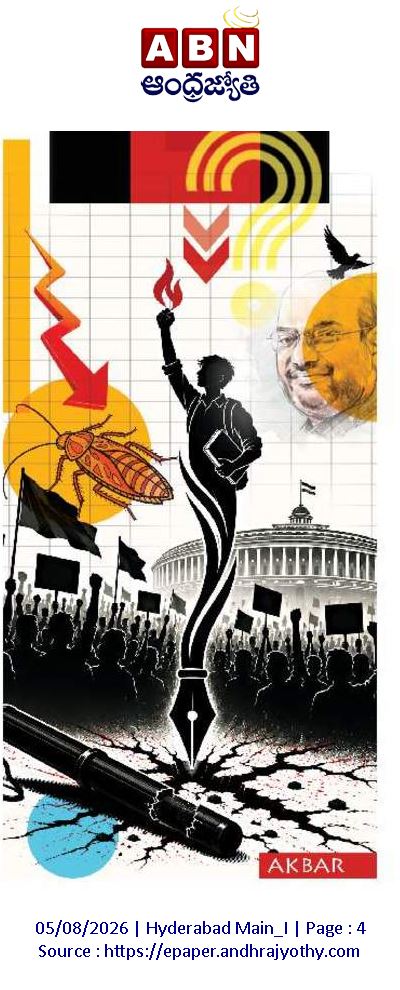
  • If the Judiciary Is Bleeding, Who Fired the First Shot?

    Screenshot

    There are systematic attempts underway to undermine the institutional authority of the Supreme Court and to damage the reputation of the judiciary. If these attempts are not stopped, the sanctity of the judiciary in the eyes of the people will erode. It will influence the tender minds of the youth. “Shots have been fired at us… the judiciary is bleeding,” expressed Justice Suryakant of the Supreme Court of India in anguish. For describing corruption in the judiciary in an 8th-grade textbook published by the National Council of Educational Research and Training, he went so far as to announce a ban on that very book. He ordered that the book should not be available even in digital form. Following these prohibitory orders, NCERT withdrew several lakh copies of the textbook. It was also reported that a bookstore owner was arrested by the police for selling photocopies of the textbook. “I will not tolerate anyone on this earth attempting to defame the judiciary,” said the Chief Justice.

    When he expressed his anger over the textbook, Prime Minister Narendra Modi was in Israel. Official sources told the media that Modi too was distressed that the judiciary’s sentiments had been hurt and remarked, “Who is overseeing all this?” After returning to the country, Modi reportedly raised the issue in a Cabinet meeting as well. News reports said he remarked, “How can we tell 8th-grade children ourselves that there is corruption in our judiciary?” Education Minister Dharmendra Pradhan also expressed regret over including the controversial chapter on corruption in the judiciary in the 8th-grade textbook. “We have immense respect for the judiciary. We did not intend to insult it deliberately,” he said. The Supreme Court sent notices to NCERT Chairman Professor Dinesh Prasad Saklani.

    With the Chief Justice expressing concern, is there really a conspiracy behind this entire episode to defame the judiciary? Are there systematic efforts underway to reduce public respect for the judiciary? In fact, the Congress attempted to create the impression that it was the Modi government itself that engineered this conspiracy. “For a decade, the BJP government has been trying to spread its ideological virus through textbooks. The inclusion of details about corruption in the judiciary was not accidental. It was a systematic attempt to corrupt the minds of students,” said Congress spokesperson Jairam Ramesh. He made indirect remarks suggesting there was evidence that Modi himself guided this process and that the RSS was behind it. Lawyers Kapil Sibal and Abhishek Singhvi, who argue opposition cases in the Supreme Court, made submissions that led Justice Suryakant to treat the matter more seriously. They succeeded in creating the impression that a major conspiracy had taken place.

    It is because people believe that they will ultimately receive justice through the judiciary that lakhs of them approach the courts. If they did not believe courts would deliver justice, there is a possibility that they might resort to vigilante justice instead of going to court. It cannot be said that Justice Suryakant’s view — “We cannot allow students to develop the impression that justice is not available in this country” — is entirely wrong. The textbook mentioned a judgment that described slum dwellers as encroachers. However, by highlighting such instances, it would be inappropriate to portray the entire judiciary as anti-poor.

    Quoting Martin Luther King Jr.’s words, “Injustice anywhere is a threat to justice everywhere,” CBI Special Judge Justice Jitendra Singh, in his recent judgment on the Delhi liquor case, detailed across nearly 600 pages how the CBI allegedly tailored facts to suit its narrative in order to implicate political opponents of the ruling party. He asked, “If even policy decisions taken to strengthen the economy are treated as crimes, how can any government take decisions?” He pointed out the injustice of keeping accused persons imprisoned for months based solely on the statements of approvers and accomplice witnesses. He observed that the right to life and personal liberty did not come from the government’s grace but from the Constitution, and that unless a balance is maintained between the Constitution and statutory law, public trust in the criminal justice system would erode. It is noteworthy that even constitutional benches which had refused stays in several instances in the Delhi liquor cases did not reflect at such depth as the lower court did. Regardless of how much this judgment is challenged in higher courts, the significance of the questions it raises will not diminish.

    By banning a textbook that mentioned corruption in the judiciary, students may lose the opportunity to learn in the classroom about what is happening within the judicial system. The very act of banning it has created greater discussion and drawn more attention to the issue. Do students learn about the world only through textbooks? Just because something is not mentioned in a textbook, will they automatically form a favorable opinion of the judiciary? It is no secret that today social media has far greater influence than any textbook. Do 8th-grade students not watch television or read newspapers? Moreover, as mentioned in the textbook, the government itself has repeatedly informed Parliament that crores of cases are pending across the Supreme Court, High Courts, district and subordinate courts. The textbook also cited remarks made in 2025 by then Chief Justice Justice Gavai that corruption and misconduct in the judiciary erode public trust. Therefore, merely banning the textbook will not increase public respect for the judiciary. It is impossible to conceal such matters from students simply by excluding them from textbooks.

    Secondly, it has become a matter of debate whether the Supreme Court has the constitutional authority to ban a book or a speech. In a democratic society, censoring a book falls under curtailing freedom of expression guaranteed by Article 19. Legal experts are raising questions about whether judicial orders fall within the permissible restrictions under Article 19 and whether the Constitution grants such authority to the judiciary. When their fundamental rights are violated, citizens can approach the courts. But when courts themselves infringe upon fundamental rights, what is to be done? they ask.

    After the strict stance taken by the Supreme Court, NCERT has fallen in line—and so has the government. Everyone is offering clarifications and apologies. NCERT apologized in court and assured that the books would be withdrawn, but the court is not satisfied with that. The Chief Justice has put a stay on the book. But is this really an issue related to corruption in the judiciary, or is there some other story behind it?

    In reality, the chapter titled ‘Corruption in Judiciary’ included in NCERT’s Class 8 book was not an attempt to inform students about corruption existing at any level within the judiciary. It appears to be an effort to raise questions about the credibility of the judiciary and influence public perception. It should be noted that NCERT books are not prepared randomly, as if someone wrote something arbitrarily and it got printed. There is a long process behind it. Every subject has two committees that oversee the entire process—from preparing the content to its publication.

    This chapter appears in the Class 8 Social Science book. It is perhaps just a coincidence that the head of the Curricular Area Group that prepared the Social Science book is a guest professor at IIT Gandhinagar, Michel Danino. This committee oversees the selection and writing of content for social science textbooks. After this comes the National Syllabus and Teaching Learning Materials Committee, a high-level committee that gave the book its final shape. The chairman of this committee is MC Pant, Chancellor of the National School of Planning and Administration. Professor Manjul Bhargava of Princeton University is its co-chair. Apart from them, there are 19 members including Sudha Murty and Sanjeev Sanyal, a member of the Prime Minister’s Economic Advisory Council. Think about it—if all these people have truly fulfilled their responsibilities, it would mean that the book’s content passed through all their scrutiny and none of them found anything objectionable in it. It is worth noting that around the same time, remarks previously made by Sanjeev Sanyal that “the judiciary is the main obstacle to rapid development in this country,” were also brought up.

    So the question is whether a committee that prepares textbook content in line with the prevailing social and political narrative in the country would inadvertently decide to teach eighth-grade students about alleged corruption in the judiciary. It is hard to believe that this happened accidentally.

    Then the question arises: why did the government not defend it in court? If so many people collectively played a role in preparing the book, then either action should be taken against all of them, or the government should defend the book in court. If one closely observes the narrative that has emerged on social media regarding this entire episode, it seems that the objective behind including this chapter in the book has already been achieved. A discussion on corruption in the judiciary has begun, and a debate has also erupted over the Supreme Court’s move to stop this discussion. There is a large group arguing that corruption exists in the judiciary and that it should be investigated and openly discussed. The same group is also saying that the judiciary becomes immediately sensitive about matters concerning itself and does not want its issues to come before the public.

    Senior Supreme Court lawyer and public interest litigator Prashant Bhushan has also objected to certain remarks made by the Supreme Court and some senior lawyers. He wrote on social media that in 2007, Transparency International had said that in public perception, the judiciary was the second most corrupt institution. He wrote that if discussion on this issue is suppressed, it will only strengthen public perception. Later, former NCERT Director JS Rajput also questioned the Supreme Court’s stance and said that stopping discussion on corruption in the judiciary is not appropriate.

    Why should the court react only when corruption in the judiciary is mentioned? Why remain silent when other institutions are criticized? This entire episode has also brought the case of Yashwant Varma back into discussion. Burnt currency notes were reportedly recovered from his residence when he was a judge of the Delhi High Court. The incident took place around Holi last year, and now another Holi has arrived. Nothing has happened in one year. There is an impeachment motion in Parliament that is to be investigated. People are asking what happened after sacks of cash were allegedly recovered from a judge’s residence. If action had been taken and an example set, it would have positively influenced public perception. But no action has been taken on such a major issue of corruption.

    There are those who argue that there is nothing wrong with textbooks discussing the ailments present in the country and that only by discussing them can they be resolved. For example, irregularities in the electoral system have also been discussed in textbooks, including an image of currency notes found in a candidate’s car. Do such incidents not occur? Over time, several allegations have been made against High Court and Supreme Court judges. There are no records of any judge being convicted or impeached over corruption allegations; at most, transfers have taken place. While ordinary citizens and political leaders face CBI raids and ED investigations, why does the same not happen to judges? The very higher judiciary that banned the 8th-grade textbook must answer these questions.

  • Selective Alignment and Strategic Recalibration: Modi’s Israel Visit

    Prime Minister Narendra Modi’s 2026 visit to Israel marked more than a diplomatic engagement; it signalled a consolidation of India’s strategic recalibration in West Asia, where national interest, geopolitical ambition, and ideological comfort increasingly intersect. By addressing the Knesset and appearing publicly alongside Israeli Prime Minister Benjamin Netanyahu at a time of intense international scrutiny of Israel’s Gaza campaign, Modi underscored that New Delhi’s foreign policy today is anchored in security, technology, and strategic leverage rather than moral symbolism.

    Convergence with US Strategy and Corridor Geopolitics

    India’s growing closeness to Israel aligns in significant ways with broader United States regional objectives. Initiatives such as I2U2 and the India-Middle East-Europe Economic Corridor form part of a new connectivity architecture linking India, the Gulf, Israel, and Europe. These projects are widely viewed as alternatives to China’s Belt and Road Initiative and represent an effort to reconfigure trade and infrastructure flows across West Asia. For Washington, they reinforce a cooperative bloc of technology-driven partners; for India, they advance its ambition to become a central node in global manufacturing and logistics networks. The convergence reflects overlapping strategic incentives rather than simple alignment.

    The corridor dimension is particularly transformative. If realised at scale, the India-Middle East-Europe Economic Corridor could recalibrate trade routes, reduce reliance on traditional chokepoints, bypass Pakistan, and position India centrally within emerging transcontinental supply chains. For Israel, integration into such a corridor strengthens its logistical and geopolitical role as a bridge between Europe and Asia.

    Gaza, Terrorism, and Diplomatic Calibration

    The Gaza conflict formed an unavoidable backdrop. Modi’s unequivocal condemnation of the October 7 Hamas attack during his speech at the Knesset was consistent with India’s long-standing zero-tolerance posture toward terrorism, shaped by its own security challenges. At the same time, he avoided strong public criticism of Israel’s ongoing military campaign. This calibrated messaging reflects India’s decision to prioritise counterterror solidarity and defence cooperation while maintaining rhetorical support for peace and a two-state solution.

    By condemning Hamas in clear terms, New Delhi reinforced its own narrative against cross-border militancy while avoiding diplomatic friction with Israel at a moment of expanding strategic engagement.

    Defence Cooperation and “Sudarshan Chakra”

    Defence cooperation lies at the heart of this partnership. India’s conceptual push toward a multi-layered air defence architecture, often described under the banner of “Mission Sudarshan Chakra,” dovetails with Israeli systems such as Iron Dome, Iron Beam, and the Arrow missile defense system. These battle-tested technologies enhance India’s capacity to counter drones, rockets, cruise missiles, and ballistic threats from both Pakistan and China.

    The cooperation extends beyond procurement to joint development, technology transfer, artificial intelligence integration, cybersecurity collaboration, and space research involving the Indian Space Research Organisation and the Israel Space Agency. For India, the gains are deterrence strength, technological acceleration, and progress toward defence self-reliance.

    For Netanyahu, the optics of a major Asian power standing firmly beside Israel were invaluable. It demonstrated that Israel is not isolated and that influential emerging powers remain willing to deepen ties despite controversy. Modi’s visit offered a counter-narrative to claims of diplomatic marginalisation.

    Ideological Optics and Domestic Political Resonance

    Symbolism played a visible role in shaping domestic optics. Cultural gestures during the welcome ceremony, widely circulated across Israeli and Indian media, reinforced perceptions of ideological comfort between the two leaderships. The Rashtriya Swayamsevak Sangh (RSS), ideological parent of Modi’s Bharatiya Janata Party, has historically expressed admiration for aspects of Jewish nationalism, civilizational revival, and Israel’s security doctrine. The visit feeds into a broader narrative of civilizational confidence and muscular security policy that resonates strongly with the ruling party’s support base.

    Has India Reversed Its Pro-Palestinian Position?

    The central question remains whether India’s historically sympathetic stance toward Palestinians has been completely reversed. The answer is nuanced. India has not formally abandoned its support for a two-state solution, nor has it withdrawn diplomatic recognition of Palestine. It continues to reiterate its commitment to dialogue and peaceful resolution. However, what has changed is the priority structure. Palestine no longer defines India’s West Asia policy.

    However, from a realist perspective, what New Delhi is practising is calibrated self-interest. The distinction between “calibrated pragmatism” and “calibrated self-interest” in India’s current Israel policy is less about contradiction and more about emphasis. In classical diplomatic language, pragmatism implies flexibility guided by national interest while maintaining normative commitments. Self-interest, by contrast, suggests a sharper prioritisation of material and political gains, even if that means diluting earlier moral positions. India’s present approach arguably contains elements of both.

    Will This Shield Modi from Domestic Opposition?

    A crucial dimension is whether this approach protects Modi’s political interests amid criticism from opposition parties. Critics argue that India’s visible proximity to Israel during a humanitarian crisis risks undermining its moral standing and alienating sections of India’s Muslim population. They frame the visit as a departure from India’s historical commitment to anti-colonial solidarity and Global South leadership.

    However, in electoral terms, the strategic framing of the visit may blunt much of this criticism. By emphasising counterterrorism, national security, defence modernisation, and technological advancement, the government situates the Israel relationship within themes that enjoy broad public resonance. For a significant segment of the electorate, strong condemnation of Hamas aligns with India’s own security concerns, while high-technology defence agreements signal preparedness against external threats. In a political landscape where leadership perception and national security credentials carry substantial weight,  imagery can outweigh normative debates for many voters. For now, the strategic and security narrative appears more electorally potent than moral critique.

    Balancing Arab Relations

    India’s relations with Arab states require careful management. The country relies heavily on Gulf nations for energy imports, trade, and remittances from its diaspora. Yet several Gulf governments themselves pursue pragmatic engagement with Israel within broader economic frameworks. Thus far, Arab governments appear to interpret India’s Israel engagement as strategic pragmatism rather than ideological hostility.

    It is clear that India has moved beyond classical non-alignment toward selective alignment driven by sectoral advantage. Israel offers advanced defence technology, innovation ecosystems, and connectivity potential. In return, Israel gains market access, diplomatic legitimacy, and a powerful Asian partner at a moment of global contention.

    India’s sympathy for Palestine has not disappeared, but it has been strategically recalibrated and deprioritised. Whether this recalibration fully insulates Modi from domestic criticism remains contingent on political developments, but in the present context, the alignment appears designed not only to advance strategic interests abroad but also to consolidate political capital at home.

  • “Between Inclusiveness and Centralization: The RSS at a Crossroads”

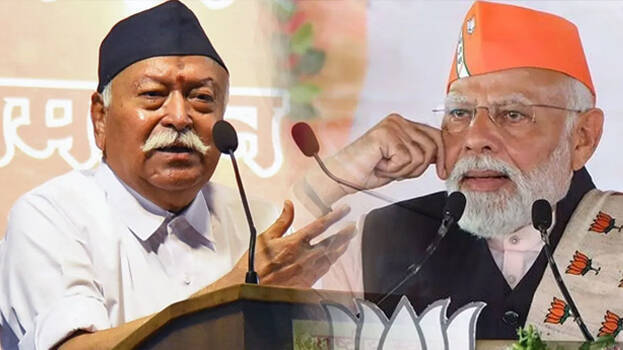
    What direction does Mohan Bhagwat’s idea of “Sarvesham Avirodhena” — accepting everyone without opposition — suggest for India? The question has gained renewed relevance as the Rashtriya Swayamsevak Sangh (RSS) enters its centenary phase and its chief addresses diverse audiences across the country. His meetings are drawing an unusually wide cross-section of society. Academics, doctors, lawyers, business leaders, artists, poets, writers, sportspersons, actors, media professionals, former judges, and representatives of voluntary organizations have attended his interactions. Even individuals who once sharply criticized the RSS, as well as those who earlier remained neutral, are now seen at these gatherings. In Mumbai, prominent film personalities were present to listen to him, and in Hyderabad even left-leaning participants attended his address. The sheer diversity of attendees has itself become a subject of discussion, raising questions about whether this reflects ideological curiosity, political pragmatism, or a broader search for direction in uncertain times.

    “Accepting everyone without opposition” implies social harmony that transcends divisions of religion, caste, language, and class. It suggests that minorities are partners in the national journey rather than adversaries, that ideological diversity is natural in a plural society, and that the strength of the nation ultimately rests on the character and discipline of its citizens. Within the RSS framework, this aligns with its long-standing objective of organizing Hindu society. At the same time, Bhagwat has acknowledged that certain earlier hardline positions — particularly some formulations associated with M. S. Golwalkar’s book Bunch of Thoughts — were shaped by specific historical contexts and should not be treated as eternal doctrine. This acknowledgment is widely viewed as an effort to recalibrate ideological emphasis for contemporary India.

    The historical evolution of the RSS provides important perspective. The organization was founded in 1925 by K. B. Hedgewar. An often-overlooked detail is that Hedgewar continued as a member of the Indian National Congress until 1935, even after establishing the RSS. This reflects the fluidity of nationalist politics in the early twentieth century, when ideological boundaries were not rigid. The period witnessed internal debates between moderate and radical tendencies within the Congress, the emergence of Mahatma Gandhi as a mass leader, the formation of the Communist Party of India, the influence of global ideological currents, and powerful social reform movements.

    Among the most significant of these reform efforts was the Mahad Satyagraha of 1927 led by B. R. Ambedkar. At Mahad, Ambedkar mobilized Dalits to assert their right to draw water from a public tank, challenging the entrenched system of untouchability. The movement was a forceful assertion of equality and dignity within Hindu society. The RSS emerged in this broader atmosphere of social churning, when caste hierarchy, representation, and reform were intensely debated. Hedgewar’s emphasis on transcending caste divisions must therefore be understood within this larger historical context.

    After Hedgewar’s death, the RSS underwent further transformation. The distance between the Congress and the RSS widened as Jawaharlal Nehru adopted a European-influenced model of secularism, and the Quit India Movement spearheaded by Gandhi and Nehru sought to rejuvenate mass resistance against colonial rule. Under Golwalkar, the trauma of Partition and communal tensions sharpened the articulation of cultural nationalism. Later, under Balasaheb Deoras, the organization expanded its social and political engagement. Deoras maintained working relations with leaders across ideological divides, including Indira Gandhi and P. V. Narasimha Rao, reflecting a pragmatic openness to dialogue. He also played a role in facilitating the merger of the Bharatiya Jana Sangh with the Janata Party in the post-Emergency period, a development that eventually led to the formation of the Bharatiya Janata Party (BJP). This phase demonstrated that the RSS could influence political realignments while retaining organizational distinctiveness.

    In contemporary India, however, the distinction between the RSS and the BJP is often blurred in public perception. Bhagwat has repeatedly stated that the RSS does not seek political power and should not be equated with the BJP. Yet the BJP’s prolonged tenure under Narendra Modi has given rise to what critics describe as a “one man–one party” model, where political authority and electoral appeal are highly centralized around a single leader. Symbolism has reinforced this perception. When Bhagwat was seen standing behind Modi during the Pranaprathista of Lord Sriram at the Ram Temple in Ayodhya, many observers naturally assumed that Bhagwat stands behind Modi in all his actions and decisions. Such imagery strengthens the impression that ideological and political authority function in close alignment, even if institutional distinctions are formally maintained.

    This generates a fundamental tension. If “Sarvesham Avirodhena” calls for inclusiveness and accommodation, can it coexist with a political structure that appears increasingly centralized? Supporters argue that decisive leadership is necessary in a complex global environment. Critics counter that inclusiveness requires institutional pluralism, space for dissent, and broader participation in shaping national priorities.

    Bhagwat’s recent remarks have also addressed economic and intellectual concerns. He has expressed reservations about uncritical globalization and about the long-term implications of the Indo–US strategic and economic relationship. Observers debate whether such engagements enhance India’s autonomy or deepen structural dependencies. At the same time, Bhagwat has emphasized the urgency of building strong indigenous research ecosystems. Cultural confidence, in his view, must be matched by sustained investment in knowledge creation and innovation. However, India continues to invest less than one percent of its GDP in research and development, and the country lags significantly behind China in scientific and technological advancement.

    Ultimately, Bhagwat’s articulation suggests a vision rooted in cultural nationalism, social cohesion, character building, intellectual self-strengthening, and broad societal outreach. Yet the credibility of “Sarvesham Avirodhena” will depend not merely on its rhetorical appeal but on how effectively it addresses caste inequities, minority concerns, centralized political authority, research deficits, and strategic economic choices. India stands at a transitional juncture reminiscent of earlier periods of ideological debate and reform.

    The final and perhaps most consequential question, therefore, is whether the Rashtriya Swayamsevak Sangh under Bhagwat will actively shape this trajectory. Will it function primarily as a cultural and moral force, offering broad civilizational guidance while maintaining distance from day-to-day politics? Or will it intervene more directly in shaping policy priorities, influencing debates within the Bharatiya Janata Party, and moderating the balance between centralization and inclusiveness?

    If “Sarvesham Avirodhena” is to move beyond rhetoric, the RSS under Bhagwat may have to demonstrate through institutional conduct, public messaging, and social initiatives that inclusiveness is compatible with ideological conviction and strong leadership. Its engagement with questions of social harmony, minority outreach, caste reform, federal balance, and knowledge-driven development will be critical. In that sense, whether the RSS chooses to remain a guiding influence or becomes a more assertive actor may significantly shape how India’s democratic and civilizational journey unfolds in the decades ahead.